
Dryer Vent Cleaning in Orlando, FL
When a dryer starts taking two cycles to finish a normal load, or the laundry room runs hot while the clothes come out damp, the vent behind it may be restricted by lint buildup. TOP 1 provides dryer vent cleaning across the Greater Orlando area — clearing lint from the accessible vent path and checking the line from the dryer to the exterior hood. When cleaning alone won't fix it, TOP 1 repairs or replaces the vent.
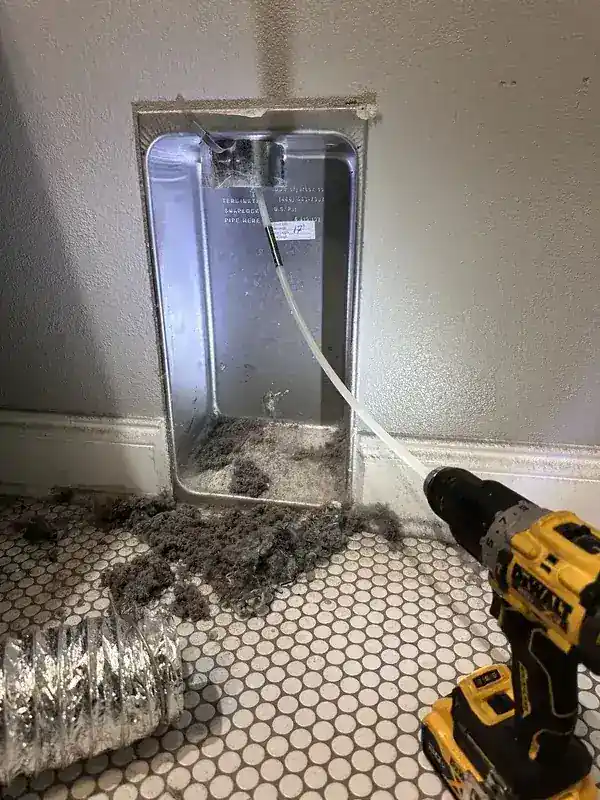
When dryer vent cleaning makes sense
A clogging vent shows up in how the dryer runs. Watch for:
- Loads that need more than one cycle to dry.
- A dryer or laundry room that gets very hot during a run.
- Clothes that come out hot and still damp.
- A burning or musty smell while the dryer runs. (If you smell burning, stop using the dryer until the vent and appliance can be checked.)
- No cleaning in over a year, or heavy laundry — a big family, pets, or a short-term rental.
Two or more of those, and the vent is worth clearing. Lint buildup in a dryer vent is a recognized fire risk, and dryer vent cleaning helps reduce that specific risk by removing the lint restriction from the vent path. The same buildup is what slows drying: lint narrows the line, the dryer works against the restriction, and loads take longer. Clearing the vent lets it move air freely again.
What TOP 1 checks first
Before quoting a firm price, TOP 1 looks at the whole run — the connection behind the dryer, the line through the wall, attic, or roof, and the vent hood outside. Much of a Florida home's ducting and venting runs through the attic, so a long or awkward route is common, and the part behind the dryer is rarely where the problem ends. The check covers where the lint sits, whether the flex hose is crushed or disconnected, and whether the exterior flap actually opens. Then the scope and price go in writing before anyone starts.
What a full dryer vent cleaning covers
A thorough cleaning is the whole duct run, not just the first few feet:
- Disconnect the dryer and clear the accessible vent run with professional equipment — brushes and airflow that reach the length of the line.
- Clean the exterior vent hood and confirm the flap opens freely.
- Pull the lint out rather than pushing it deeper into the run.
- Reconnect, then test that the vent moves air the way it should.
TOP 1 can show real before-and-after photos and video of the cleared line — you see the work, not just a line item on an invoice.
Dryer vent repair and replacement
Sometimes cleaning isn't the fix. Damaged, crushed, disconnected, or poorly routed dryer vent sections may need repair or replacement rather than cleaning alone. That might be a flex hose kinked behind the dryer, a section that's come apart in the attic, a corroded run, or a line an animal has nested in. TOP 1 repairs and replaces the vent line itself when the inspection calls for it. It does not repair the dryer appliance — if the machine is the problem, that's an appliance issue, and TOP 1 will tell you so instead of cleaning a vent that was never the cause.
What the vent is made of, and why it matters
Clearing the lint is only part of a lasting result — what the duct itself is made of decides how well the cleaning holds. During the inspection, the material of the run is part of what gets checked:
- Rigid or semi-rigid metal is the standard worth having for the permanent duct. It has a smooth interior, holds its shape, and doesn't sag into pockets that trap lint.
- A short metal transition from the dryer to the wall is fine when it's proper transition duct — not crushed, and not the thin vinyl "slinky" hose that kinks the moment the dryer is pushed back into place.
- Plastic or foil flex hidden inside a wall or ceiling is the material you hope not to find. It sags, catches lint, and isn't the safe choice for a concealed run. When the inspection turns it up, TOP 1 flags it and explains why metal venting to a proper exterior hood is the fix that lasts.
- The exterior hood should open when the dryer runs, close when it's idle, and keep animals out without choking airflow. A stuck flapper or a nest-friendly open pipe undoes an otherwise good cleaning.
TOP 1 clears the path first, then tells you plainly whether the materials will keep fighting you after the visit — so a cleaning isn't sold as a fix for what is really a routing or materials problem.
What cleaning can and cannot promise
Straight about both sides:
- It can clear the lint, let the vent move air freely again, reduce the recognized fire risk that lint buildup creates, and repair or replace a damaged line.
- It cannot guarantee an exact drying time or energy figure, fix a failing dryer, or keep a vent clear forever. Heavy laundry re-lints a line over time — the signs above matter more than the calendar.
Dryer vent cleaning pricing in Orlando
The price depends on the vent run and what it needs, and a free estimate confirms it in writing before any work. Booking dryer vent and duct cleaning together costs less than booking each separately. If the line needs repair or replacement, that's quoted separately after the inspection, in writing, before any work begins. The number you approve is the number you're charged.
How often a dryer vent actually needs it
There's no single date that fits every home — it depends on how hard the dryer runs and how long and twisty the vent path is. As a rough guide:
| Household pattern | Rough cleaning rhythm | Why |
|---|---|---|
| Average household, moderate laundry | About once a year | Steady lint load; yearly clearing keeps airflow up and fire risk down |
| Big family, lots of towels and bedding, pets, or a rental with guest turnover | Closer to every six months | More lint per week, and pets and heavy loads pack it in faster |
| Long run, many elbows, or an upstairs or interior laundry closet | Yearly at least; sooner if dry times stretch | Bends and length catch lint faster than a short, straight wall exit |
| Already taking two cycles, running hot, or smelling burnt | Don't wait for the calendar | The vent is telling you it's ready now |
The signs matter more than the calendar. If drying times climb or any of the symptoms above show up, that's the real cue — not a date.
What you can handle between visits
The daily upkeep is yours; the deep path you can't see is where a professional visit earns its place.
- Empty the lint screen after every load — the single habit that helps most.
- Vacuum the lint-trap housing now and then with a crevice tool.
- Check the outside hood after storms, or when dry times creep up — if the flap isn't moving freely or you see lint or a nest, it's time.
- Pull the dryer out occasionally, vacuum behind it, and make sure the transition hose isn't crushed.
Where the line is: the screen, the housing, and a short accessible stretch behind the dryer are yours to handle. A long or multi-story run, a roof termination, a clog partway down the line, or damaged materials are where powered tools and proper extraction matter — that's the part worth having done rather than pushing lint further in.
Why Orlando homes lint up faster
Two local realities show up in the laundry room. In high-use homes and short-term rentals near the theme-park corridor — Davenport, Kissimmee — laundry runs hard, so their vents fill faster than average. And with much of the venting routed through hot attic space and out through the roof, there's more line to clean and a higher, harder-to-reach hood than a short side-wall vent. Neither is unusual; both are just a reason to check the vent on a schedule that matches how much you actually use the dryer.
Related services and areas we serve
TOP 1 covers Orlando and nearby Central Florida communities — Winter Park, Winter Garden, Oviedo, Lake Nona, Windermere, Lake Mary, Apopka, Maitland, Altamonte Springs, and Dr. Phillips among them. When a line is damaged rather than just clogged, that's dryer vent repair — and if loads still take two cycles, the too-long-to-dry and cost guides explain why.
- Cleaning the ducts too? See air duct cleaning in Orlando.
- Want the full breakdown on price? Here are air duct cleaning costs in Orlando.
- Comparing companies first? How to vet a cleaner near you.
Dryer Vent Cleaning FAQ
Dryer Working Harder Than It Should?
If the dryer's working harder than it should, the vent is the place to start. Call TOP 1 at (321) 221-5848 or request a free estimate — you'll get the scope and the price in writing before anyone touches the line.